The De-Manning Transformation
For more than two centuries, the reliability of offshore navigational aids depended entirely on resident lighthouse keepers. Keepers maintained continuous night watches, wound clockwork descent weights every four hours, trimmed carbon-wick lamps, pumped compressed air for fog sirens, and physically polished soot from delicate Fresnel prism arrays. Stationed on wave-swept rock towers like Fastnet, Eddystone, or Skerryvore, teams endured extreme isolation, with boat reliefs frequently delayed for weeks by adverse Atlantic sea conditions.
Between 1968 and 1998, the three general lighthouse authorities (Trinity House, the Northern Lighthouse Board, and the Commissioners of Irish Lights) executed a coordinated, systematic automation program. The final manned station in England, North Foreland Lighthouse, was automated in November 1998, while Fair Isle South became the last manned station in Scotland in March of the same year. This transition was made possible not by a single breakthrough, but by the convergence of solid-state electronics, reliable diesel generators, low-wattage metal halide lamps, and resilient radio telemetry.
Redundant Lamp Changers and Solid-State Optical Systems
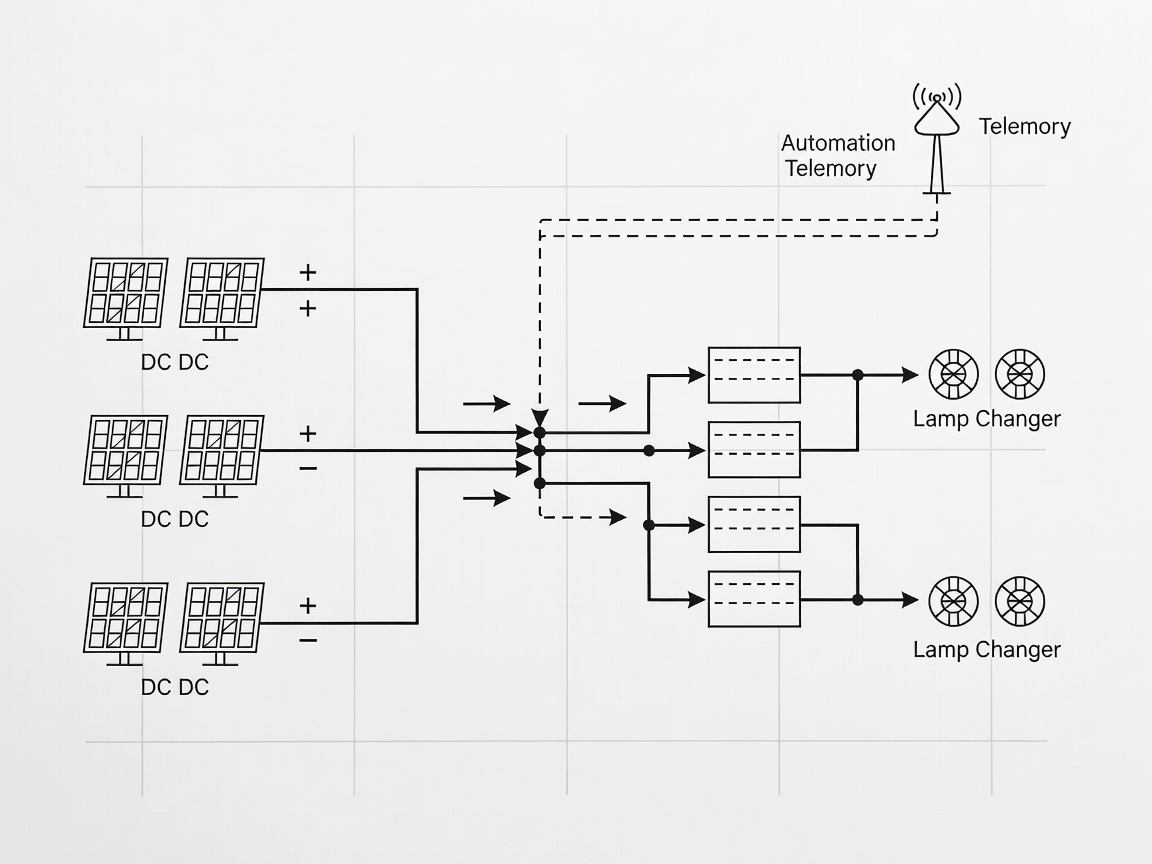
The primary vulnerability of an uncrewed optical system is lamp filament burnout. In an automated station, single points of failure cannot be tolerated. Authorities developed precision mechanical lamp changers. When an active metal halide or halogen lamp burns out, an electronic current-sensing relay detects the drop in circuit resistance.
Within seconds, a spring-loaded or micro-stepper motor rotates a secondary lamp into the exact focal point of the Fresnel lens, simultaneously restoring the beacon and transmitting an alert packet to headquarters. In contemporary installations, massive multi-ton revolving optics are increasingly supplemented or replaced by static LED beacon arrays with multi-tier diode rings. These arrays deliver required luminous range while consuming a fraction of the power, entirely eliminating moving parts and mercury float maintenance.
| Authority Jurisdiction | Central Monitoring Depot | Primary Data Telemetry | Automation Completion |
|---|---|---|---|
| Trinity House | Harwich Base, Essex | PSTN, Satellite & UHF Telemetry | Completed November 1998 |
| Northern Lighthouse Board | George Street, Edinburgh | Microwave Link & Satellite Mesh | Completed March 1998 |
| Commissioners of Irish Lights | Dún Laoghaire, Co. Dublin | Cellular, VHF & Inmarsat Telemetry | Completed June 1997 |
Power Architectures: From Diesel Generators to Solar Photovoltaics
Early automated rock towers relied on triple redundant diesel engine generator sets installed in former storage vaults. Fuel was transferred via helicopter underslung tanks or support tenders like the THV Patricia or NLV Pharos. Diesel units required regular oil servicing, air filter changes, and periodic top-end overhauls.
Modern retrofit designs favor large photovoltaic panel arrays mounted on external gallery railings, paired with sealed deep-cycle lead-acid or lithium iron phosphate battery banks. Stations such as South Stack and Fastnet maintain micro-wind turbines or small high-efficiency backup generators that cycle solely when solar insolation drops below winter baseline thresholds. This low-power architecture reduces mandatory site inspection schedules to a single annual preventative maintenance run.
Fog Signals and Remote Telemetry Supervision
Compressed-air diaphone fog horns, which consumed vast quantities of fuel to power piston air compressors, have been replaced with solid-state omnidirectional electric emitters. Atmospheric backscatter visibility meters continuously bounce infrared light pulses off oceanic moisture. When visibility drops below statutory limits (typically two to three nautical miles), the telemetry unit automatically triggers the acoustic fog emitter without requiring local human assessment.